Game-Trained Navigation Policies in Real-World Robotics
Simulation scales robot training.
Game-trained robot navigation is built on an economic advantage and an engineering obligation. Simulation supplies training volumes that physical data collection cannot match, but successful deployment depends on closing distinct gaps in appearance, physics, sensor noise, and scenario coverage. The strongest pipelines use techniques for each gap because realistic rendering or a single policy architecture alone is not enough.
Why simulation has become the primary training ground for robot navigation
Real-world navigation data is slow, expensive, and dangerous to collect. The rare situations most important for safety are also among the hardest to reproduce physically. Training on those situations puts the need to learn from them at odds with keeping the robot and its surroundings safe. Simulation changes those costs by allowing far more agent-environment interaction than physical collection can support.
Parallelism is the decisive advantage. Isaac Lab runs agent-environment interaction entirely on the GPU, reducing training times that once required days to hours. NavRL++ trains with 1,024 robots running at the same time under a curriculum learning framework. That scale makes simulation more than a convenient substitute for field trials. It gives modern navigation policies the amount of training they need, but physical trials are still needed to check whether the behavior transfers.
This economic shift also builds on existing infrastructure. Tools historically developed to train humans are being repurposed to train machines, bringing rendering systems and physics engines into robotics without rebuilding them from scratch. Their visual fidelity makes simulated sensor data look more and more like real sensor data. However, the appearance of a realistic world does not establish that a robot will experience the same forces, measurements, or situations when it leaves that world.
What the sim-to-real gap actually is — four distinct failure modes, not one
A simulated policy can be stable and still fail during deployment because the training environment differs from reality in several independent ways. The visual domain gap is in textures, lighting, and rendering artifacts. Physics approximation error is in contact, friction, and dynamics, especially during contact-rich tasks. Sensor noise mismatch concerns the specific noise signatures of physical cameras and LiDAR. Long-tail scenario absence concerns rare but consequential situations that training never generates.
These distinctions determine which intervention has a chance of working. A team can apply domain randomization to visual inputs, see no improvement, and conclude that sim-to-real transfer is ineffective. Yet the binding constraint may be sensor noise or an inaccurate dynamics model. More varied textures cannot correct actuation timing. Changes in lighting also cannot fix how poorly the simulator models balance, terrain response, or whole-body dynamics.
Hardware can compound these discrepancies during sustained operation. The Unitree Go2-W deployment found that the manufacturer-provided controller concentrated load and heat in specific hip joints, preventing extended operation. A separate reduced-heating, flat-terrain locomotion policy was designed to mitigate that problem. This was an operational failure that simulation had not exposed. The four-part framework therefore organizes the transfer problem without implying that every deployment failure belongs neatly to a single category, and the techniques that follow address different parts of that framework.
How domain randomization addresses the visual gap — and where it stops working
Domain randomization broadens the conditions a policy encounters during training so that reality can appear as another sample from a learned distribution. It deliberately perturbs textures, lighting, and physics parameters. For visual navigation, the mechanism is straightforward. A policy exposed to substantial variation has less reason to depend on a particular surface appearance or lighting condition.
That makes domain randomization a practical response to the visual gap, but not a replacement for the other transfer techniques. Physics parameters can be randomized, but changing a parameter cannot fix a model that gets contact wrong. Visual randomization also cannot reproduce the specific noise signature of a physical IMU or LiDAR. Nor does it create the reactive human dynamics required for social navigation. Its reach depends on what the training environment can represent and vary.
Excessive randomization can teach a policy to treat all visual inputs as uncertain, sacrificing precision for conservative behavior. The engineering trade-off is therefore between useful robustness and loss of discrimination. This limit explains why a policy also needs a way to learn from the physical state of the simulated world without depending on information unavailable after deployment.
Asymmetric actor-critic training and how privileged simulation information closes the physics gap
Asymmetric actor-critic training uses information that exists inside the simulator but cannot be measured directly by the deployed robot. During training, the critic gets privileged quantities such as exact contact forces, ground truth velocity, and obstacle positions. The actor remains restricted to proprioceptive sensor data available on the physical robot. The deliberate asymmetry lets training benefit from a fuller account of the physics without making that account a required input to the deployed policy.
At deployment, only the actor is used. Its behavior has nevertheless been shaped by a critic that could evaluate the simulated physical state more completely. This arrangement can make zero-shot transfer achievable for dynamics that visual randomization alone cannot bridge, within the limits of imperfect simulated physics. Instead, it extracts more useful training guidance from the physics that the simulator exposes while preserving the actor’s real-world observation constraints.
The surrounding simulation infrastructure supports that separation. Isaac Lab combines actuator models, multi-frequency sensor simulation, domain randomization tools, and data collection pipelines, making transfer depend on more than the learning algorithm. The University of Toronto’s DR-MPC work illustrates the related importance of respecting deployment inputs. It unifies path tracking and human avoidance within a corridor abstraction in a real-time, single-sensor system. Though it is designed for social navigation, it follows the same rule: what a system can do during training must not leave it needing inputs it will lack at deployment.
Real-to-sim reconstruction as a way to close the long-tail scenario gap
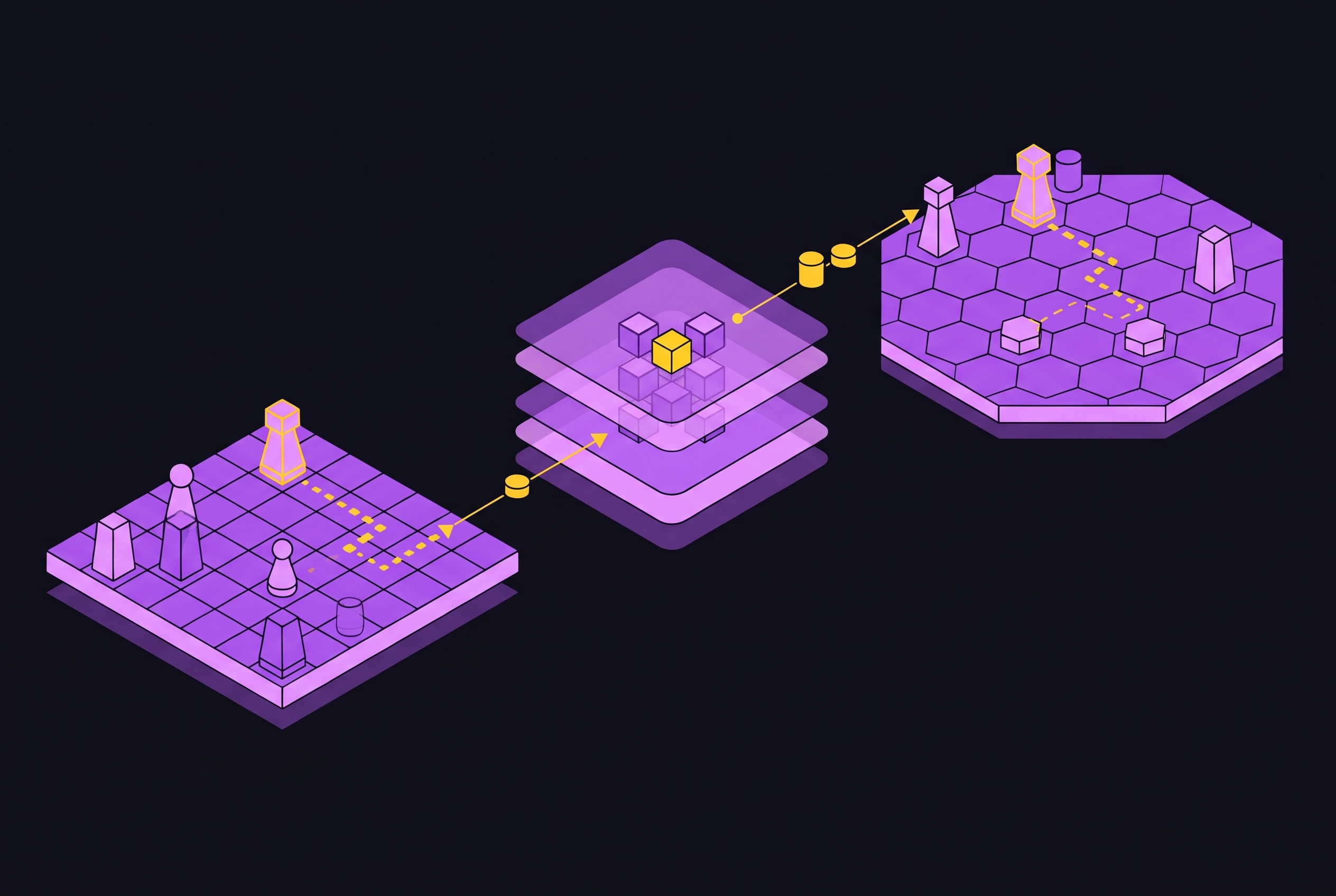
Real-to-sim reconstruction changes where the training world comes from. Rather than relying only on generic assets, it builds a physics-aware simulation from the actual deployment environment. UrbanVerse turns real-world urban scenes from city-tour videos into interactive environments that run in Isaac Sim, building scenes from countries across the world. The relevant streets can become the training substrate. This directly addresses missing location-specific geometry, although reconstructing a place does not guarantee successful behavior within it.
UrbanVerse also provides a concrete limit on that promise. The original PPO-UrbanVerse policy on the Coco wheeled robot achieved a 0% success rate in one challenging dense-obstacle scene. It succeeded only after customized real-to-sim-to-real fine-tuning. Reconstruction narrowed the discrepancy but did not eliminate it. The result separates having the right environment from having a policy prepared for the interactions that environment demands.
CityWalker provides a useful contrast in the training data itself. Foundation models trained on large-scale but non-interactive data succeed mainly when there are no obstacles and fail when obstacles appear. The contrast shows why scene quantity is not a substitute for interactive dynamics. Duality AI’s Falcon platform takes a similar digital-twin approach, using Unreal Engine to make high-fidelity synthetic data for uses that include drone flight and wilderness navigation. Its relevance lies in making that reconstruction-based workflow available.
Diffusion-based policies and why they change how the sensor noise gap is handled
Traditional pipelines accumulate errors across perception, localization, and planning. When simulated and physical sensors have different noise signatures, those errors can compound through the sequence. Diffusion policies instead generate trajectories directly from visual observations. This removes intermediate stages where error can accumulate, although it does not make the observations themselves noise-free.
Tel Aviv University’s Visual Demonstration-based Embodiment-agnostic Navigation framework, or ViDEN, combines that approach with depth images. Depth reduces input dimensionality and is less sensitive to texture variation than RGB, sidestepping part of the visual discrepancy as well as some of the errors caused by sensor noise. ViDEN trains on task-centric, embodiment-agnostic demonstrations and supports deployment without embodiment-specific retraining. The structural change is in what the policy must infer. It learns how to turn observations into trajectories, so each traditional intermediate representation no longer has to transfer on its own.
Cross-embodiment work extends the same effort to reduce dependencies. EA-Nav builds a navigation dataset from Internet videos of humans, animals, and vehicles, then conditions trajectories on embodiment geometry through tokens. The same view can therefore produce a different trajectory for a narrow animal and a wide vehicle without RL-scale interaction data. COMPASS demonstrates zero-shot sim-to-real performance and RL fine-tuning transferability across embodiments using Isaac Lab.
Where the combined toolkit still falls short and what the remaining engineering looks like
Contact-rich physics remains a difficult residual gap even when the transfer techniques are combined. Errors in rigid body contact, friction, and whole-body dynamics can build on each other in ways that even high-fidelity simulation misses. The Go2-W heating failure illustrates the operational consequences of an incomplete simulation account. Privileged information is only as faithful as the simulated quantities it reveals. The remaining direction is therefore better physical modeling and transfer infrastructure.
Training scale has its own systems constraints. Unreal-MAP still uses the CPU for scene logic, physical calculations, and network communications, so its training rate cannot match purely GPU-implemented environments. That penalty grows with the number of parallel agents and training iterations. The engine landscape includes Unreal Engine, used by CARLA and AirSim, Unity, and NVIDIA Isaac Sim, with ray tracing and physically based rendering supporting visual fidelity. Their shared ability to produce realistic imagery does not erase differences in execution architecture or throughput.
Deployment robustness also extends beyond the learned policy. NavRL++ studies how sensor noise, perception failures, system latency, and control response each affect transfer. That framing makes the production task explicit. Reward design, safety systems, sim-to-real infrastructure, and MLOps tooling are more consequential than choosing between policy architectures alone. Vision-language models allow natural language commands without explicit waypoint programming, but engineers still have to work out how to link that semantic understanding to physical navigation policies trained in simulation.
What a well-engineered game-trained navigation pipeline looks like in practice
For a team building a deployment pipeline, the lesson is to choose and sequence interventions by the failure mode they address. A deployment pipeline should begin with real-to-sim reconstruction that includes the deployment location’s relevant interactive dynamics. Domain randomization then hardens training against visual differences that reconstruction leaves unresolved. Asymmetric actor-critic training adds guidance from privileged physics without requiring the robot to observe it. Diffusion-based pretraining or fine-tuning cuts how much sensor noise builds up along the perception-to-action path.
An integrated infrastructure layer makes that sequence more practical. Isaac Lab combines GPU-parallel physics, photorealistic RTX rendering, actuator models, randomization, and data collection in an open-sourced framework. Teams can build on its reinforcement and imitation learning capabilities without assembling every component from separate libraries. The resulting assets can also outlive one deployment. COMPASS can supply navigation specialist policies that generate large-scale synthetic datasets in Isaac Lab to train advanced VLA foundation models such as Gr00t N1.5, so the transfer pipeline can also feed further training.
Physical validation remains part of the architecture. DR-MPC’s simulation validation and direct real-world feasibility testing illustrate the benefit of designing a system for both settings from the start. Even a correctly assembled pipeline will encounter conditions outside its training distribution. The practical next action is to build safety systems for graceful failure and monitoring infrastructure that catches distributional drift before it becomes a safety issue. That ongoing MLOps work makes a transferred policy into a navigation system that can keep working in the field.
Sources
- TOWARDS REAL-WORLD SOCIAL ROBOT NAVIGATION WITH DEEP
Provided details on the University of Toronto's DR-MPC work unifying path tracking and human avoidance in a real-time, single-sensor social navigation system.
- EA-Nav: Learning Safe Visual Navigation Policies with Embodiment Awareness
Provided the EA-Nav approach of building navigation datasets from Internet videos and conditioning trajectories on embodiment geometry through tokens.
- Isaac Lab: A GPU-Accelerated Simulation Framework for Multi-Modal Robot Learning
Provided details on Isaac Lab's GPU-accelerated training framework, including actuator models, multi-frequency sensor simulation, and domain randomization tools.
- Embodiment-Agnostic Navigation Policy Trained with Visual Demonstrations
Provided the basis for the ViDEN framework discussion, covering depth-image-based diffusion policies and embodiment-agnostic navigation trained on demonstrations.
- Long-Distance Real-World Navigation of the Legged-Wheeled Robot Go2-W Using Deep Reinforcement Learning
Provided the Go2-W deployment example where hip joint heating from the manufacturer-provided controller prevented extended operation.